1. A clear message on the first screen
Someone arriving at your website wants to know three things quickly: what you do, whether it is for them, and what to do next. If they have to guess, they leave.
A good start combines a specific headline (“Emergency plumbing in Valencia”), a sentence explaining the service and a main button. Avoid generic slogans that could apply to any company.
Write the way you talk to your customers. If your copy sounds like a corporate brochure, visitors will not recognise themselves in it.
2. One main action and easy contact
Every page should push towards one action: calling, writing on WhatsApp, requesting a quote or booking. Choose the main one and make it visible without anyone having to hunt for it.
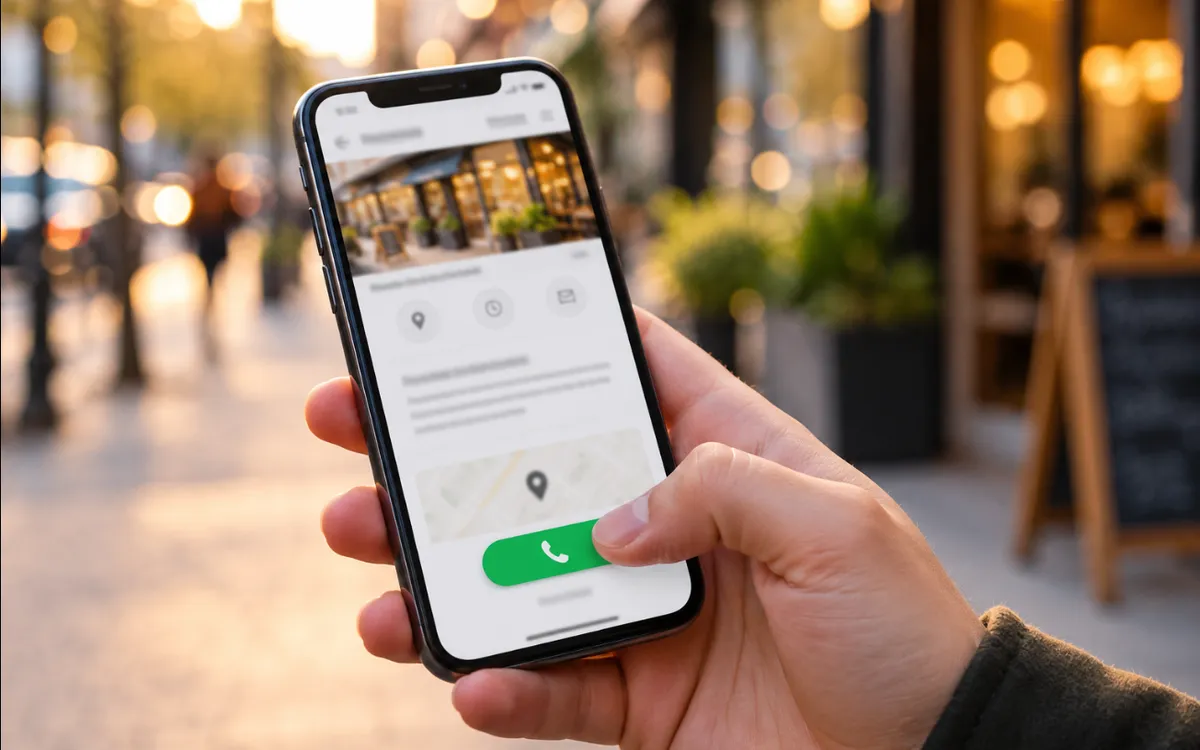
- A real phone number and email address, with links that work when tapped on a mobile.
- A short form: ask only for what is essential.
- Address and opening hours if you serve customers at a premises, and a map if it helps.
- A clear confirmation message when a form is sent, shown only if the submission has genuinely worked.
Test your forms
Send yourself a test enquiry every so often. A form that fails silently is one of the costliest and least visible mistakes.
3. It works well on mobile and loads fast
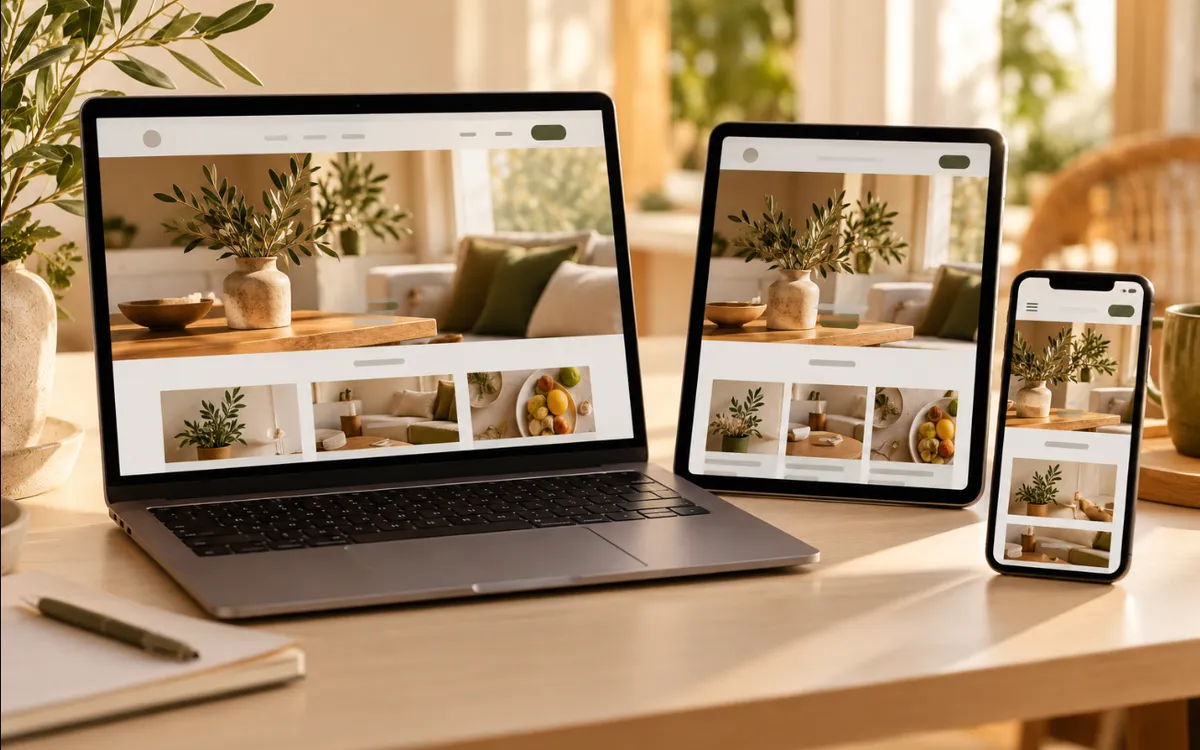
Google uses the mobile version of your website to index and rank it. Its documentation puts it bluntly: the main content, structured data and metadata of the mobile version must be equivalent to the desktop ones, and it recommends responsive design as the simplest option.
That means buttons that are easy to tap, text that is readable without zooming, and no hiding on mobile of information that is on desktop. If you use tabs or accordions to save space, the content must still be there.
Speed counts too. Google recommends good Core Web Vitals values, although it does not present them as a guarantee of ranking. You will find the detail in the guide on how to make your website load fast.
4. Proof of trust that is genuine
A stranger needs reasons to trust you. The best ones are those that can be checked:
- Real photos of your work, your premises and your team, instead of generic stock images.
- Authentic customer reviews, with their permission, or a link to your Google listing.
- Who you are: name, experience, real qualifications or certifications.
- Examples of finished jobs, described honestly.
- Clear prices, timescales or terms whenever you can give them.
Google insists that helpful content is written with people in mind and makes clear who creates it and with what experience. Inventing testimonials, figures or client logos is not only unethical: it destroys trust if it comes to light.
5. A well-handled SEO foundation
You do not need to be an expert, but there are basics that are applied when the website is built:
- One page for each important service, with its own title and text. A single page with everything mixed together competes worse.
- Unique, descriptive titles on every page. Google recommends avoiding vague titles such as “Home”, repeating them across pages or stuffing them with keywords.
- A single clear H1 that says what the page is about.
- Crawlable links between your pages so that Google can discover them.
- Consistent business details: name, address and phone number identical on the website and on your profiles. If you have a premises, you can mark them up with LocalBusiness structured data; Google requires at least a name and address, although it does not guarantee that any special feature will be shown.
- Registration in Search Console to check how Google sees your website.
The rest of the road is in the guide How to rank a website on Google, step by step. And it is worth remembering that Google does not guarantee to crawl or index any particular page.
6. The legal texts required by law
In Spain, the LSSI requires anyone providing services over the internet to show, permanently, easily and free of charge, their name, address, email, tax ID (NIF) and, if applicable, Commercial Register details. If you advertise prices, they must be clear and state whether they include taxes and shipping costs.
On top of that come a privacy policy if you collect data (for example, with a form) and a cookie policy if you use non-technical cookies. The guide from the Spanish Data Protection Agency (AEPD) states that technical cookies are exempt from consent and that the banner must make it as easy to reject as to accept.
The texts must be adapted to what your website actually does; copying another company’s will not do. If in doubt, consult a legal professional.
7. Maintenance and measurement
A website that nobody looks after ages badly: broken links, plugins that are not updated, outdated information. Decide who updates the content and who takes care of the technical side.
Measure in order to decide: how many enquiries arrive, where they come from and which pages work. With that data you will know what to improve first. If your website is on WordPress, we cover upkeep on the website maintenance page.
Frequently asked questions
How many pages does a business website need?
There is no magic number. The usual set is a home page, one page for each main service, about us, contact and the legal pages. Add more only when you have something useful to say. A few well-crafted pages beat many weak ones.
Do I need a blog?
It is not compulsory. A blog is worthwhile if you are going to publish useful content consistently and answer your customers’ real questions. Google says it has no preferred length and that content should be made for people, not for search engines.
Is a cookie notice compulsory?
It depends on the cookies you use. Technical ones, essential for the site to work, are exempt from consent; analytics or advertising cookies usually require it. According to the AEPD, rejecting them must be as easy as accepting them. Check your case with a professional.
Are social networks enough instead of a website?
Social networks help, but a website is a space you control, with your contact details and your information, and without depending on an algorithm. The usual approach is to combine them: social networks attract and the website informs and converts.
Sources6
- Google Search Central — Mobile-first indexing best practicesdevelopers.google.com (opens in a new tab)
- Google Search Central — Title linksdevelopers.google.com (opens in a new tab)
- Google Search Central — Creating helpful, reliable, people-first contentdevelopers.google.com (opens in a new tab)
- Google Search Central — LocalBusiness structured datadevelopers.google.com (opens in a new tab)
- BOE — Ley 34/2002 (LSSI-CE), article 10 (in Spanish)boe.es (opens in a new tab)
- AEPD — Guide on the use of cookies (in Spanish)aepd.es (opens in a new tab)