
Why there is no standard price
When someone searches “how much does a website cost”, they expect a number. The problem is that two websites that look alike from the outside can need very different amounts of work. A presentation page with four sections and a shop with hundreds of products are not the same project, even if both are called “a website”.
That is why any figure you see without having described your case is an empty reference. This article does not give you invented price ranges: it explains which factors move a quote and how to estimate yours before you ask for offers.
The useful approach is the reverse one: first you define what your business needs the website to do, and the work required is calculated from there.
The factors that move the quote
These are the elements that weigh most on the price, almost across the board:
- Number and type of pages. A single page is not the same as a site with services, team, blog and contact. Each distinct page template (not each page) adds design and development.
- Custom design or template. Starting from a template reduces the work but limits what the brand can express. A custom design needs its own structure, hierarchy and visual system.
- Features. A contact form is simple. Bookings with a calendar, a client area, payments, several languages or connections to other software add development and testing.
- Online store. Catalogue, variants, shipping, taxes, payment gateway and order emails make up a project of their own; see the guide to WooCommerce or Shopify.
- Content. Writing the copy and getting your own photography takes time. If you supply them, the project is lighter; if the studio creates them, they are quoted separately or explicitly included.
- Basic SEO and performance. Heading structure, metadata, speed and structured data are part of a job done well, but not every quote includes them.
- Deadlines. A rush job usually means reshuffling the schedule of whoever does it, and it can affect the price.
A useful rule
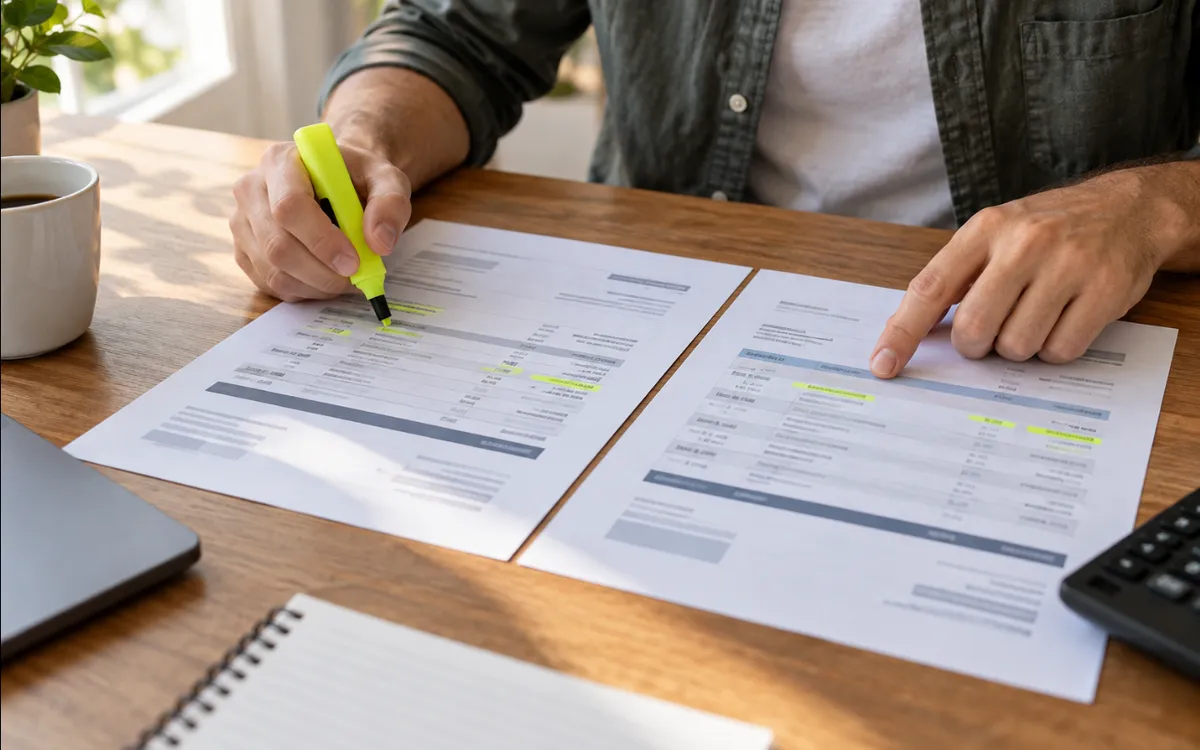
If two quotes for the “same website” differ a lot, it is almost always because they do not cover the same things: copy, photos, SEO, training or maintenance. Ask for a breakdown of what each line includes.

Costs that are not design but still count
A website is not paid for once and forgotten. There are recurring costs worth knowing about from the start:
- Domain: the name of your website (for example, yourbusiness.com) is renewed every year.
- Hosting: the server where the website lives, with periodic renewal.
- Maintenance: if you use WordPress, the core, plugins and backups have to be kept up to date. The official WordPress documentation recommends always running the latest version, deleting plugins you do not use and taking regular backups, checking that they can be restored.
- Licences: some paid plugins or tools renew annually.
- Future changes: new pages, copy or promotions. Agree how they are handled, either at a set rate or with a bank of hours.
Ask who will be the registered holder of the domain and the hosting account. It should be your business, not the studio, so that you can change provider whenever you like.
What a good quote should include
A reliable quote is not a single figure. Check that it covers, at the very least:
The list of pages and features, written in plain language.
Who produces the copy, images and logos.
How many rounds of revisions it includes and how changes of scope are handled.
What is handed over at the end: full access, and ownership of the domain and the content.
What is covered on the legal side: legal notice, privacy policy and cookie policy.
Delivery times and payment terms.
What happens afterwards: support, training and maintenance.
On the legal side, for businesses in Spain: the Information Society Services Act (LSSI) requires, in its article 10, that the provider makes certain details available permanently, easily and free of charge, such as its name, address, email, tax ID (NIF) and, where applicable, its Commercial Register details. Make sure your website shows them, and consult a professional about any doubt regarding your specific case.
How to estimate what you need before asking for offers
A half-hour exercise saves you misunderstandings and makes the quotes comparable.
Write down what you want the website to do: get people to call you, book, buy or find you.
List the minimum pages: home, services, about us, contact and the legal ones.
Note the essential features and the ones that can wait for a second phase.
Gather what you already have: logo, photos, copy, genuine reviews.
Find two or three websites you like and note what you like about each.
Ask for the quote in writing and fixed.
A phased project is a good way to control the investment: you launch the essentials and expand once the website is already giving you results. That said, no website guarantees customers on its own; Google reminds us that following its best practices does not ensure that a page will appear in the results. If you want to understand what is worth having, the guide on what a business website needs will help you prioritise.
Warning signs when comparing offers
- A very low price with no detail of what it includes or who holds the domain.
- Promises of “top positions on Google” or guaranteed results.
- No contract, invoice or terms for changes.
- You are not given the access details, or the website depends on an account belonging to the provider.
- Templates identical to other websites in the sector, with no adaptation to your brand.
At Reflected Studio we work with a fixed quote before starting; if you would like to see how we approach a project, it is explained on the web design page.
Frequently asked questions
Is a cheaper website worse?
Not necessarily, but you should check what it includes. A simple one-page website can be enough and perfectly reasonable. The risk is paying little for something that then needs copy, SEO, legal pages or maintenance added separately, and ends up costing the same or more.
Do I have to pay something every year?
Yes. The domain and hosting are renewed periodically and, if the website uses WordPress, the system, plugins and backups should be kept up to date. Ask what is included and what is optional so you are not caught out.
Who owns the website?
It should be your business. Before hiring anyone, confirm in writing that the domain, hosting and content are in your name and that you will receive all the access details when the project ends.
Can I build it myself with a free website builder?
You can, and as a first step it may be enough. Bear in mind the time it will take you, the design and SEO limitations of each tool, and that moving to another platform later takes work. Weigh up what your time is worth against commissioning it.
Sources4
- BOE — Ley 34/2002 (LSSI-CE), article 10 (in Spanish)boe.es (opens in a new tab)
- WordPress — Hardening WordPress (updates, plugins, backups)developer.wordpress.org (opens in a new tab)
- Google Search Central — Google Search Essentialsdevelopers.google.com (opens in a new tab)
- WordPress.org — About WordPresswordpress.org (opens in a new tab)